
- Home
- Consultancy
Consultancy for rail life optimization.
RailManagement advises railways on everything that happens between wheel and rail: noise and vibration, wear, rolling contact fatigue and corrugation.

Why rails suffer.
Train wheels of high-strength steel need very little energy to roll on steel rails. That makes trains one of the most energy-efficient means of transport for freight and passengers.
The contact stresses between wheel and rail are often high, though. Rails wear and develop rolling contact fatigue damage.
The RailManagement team has extensive experience in investigating such issues and finding practical solutions.
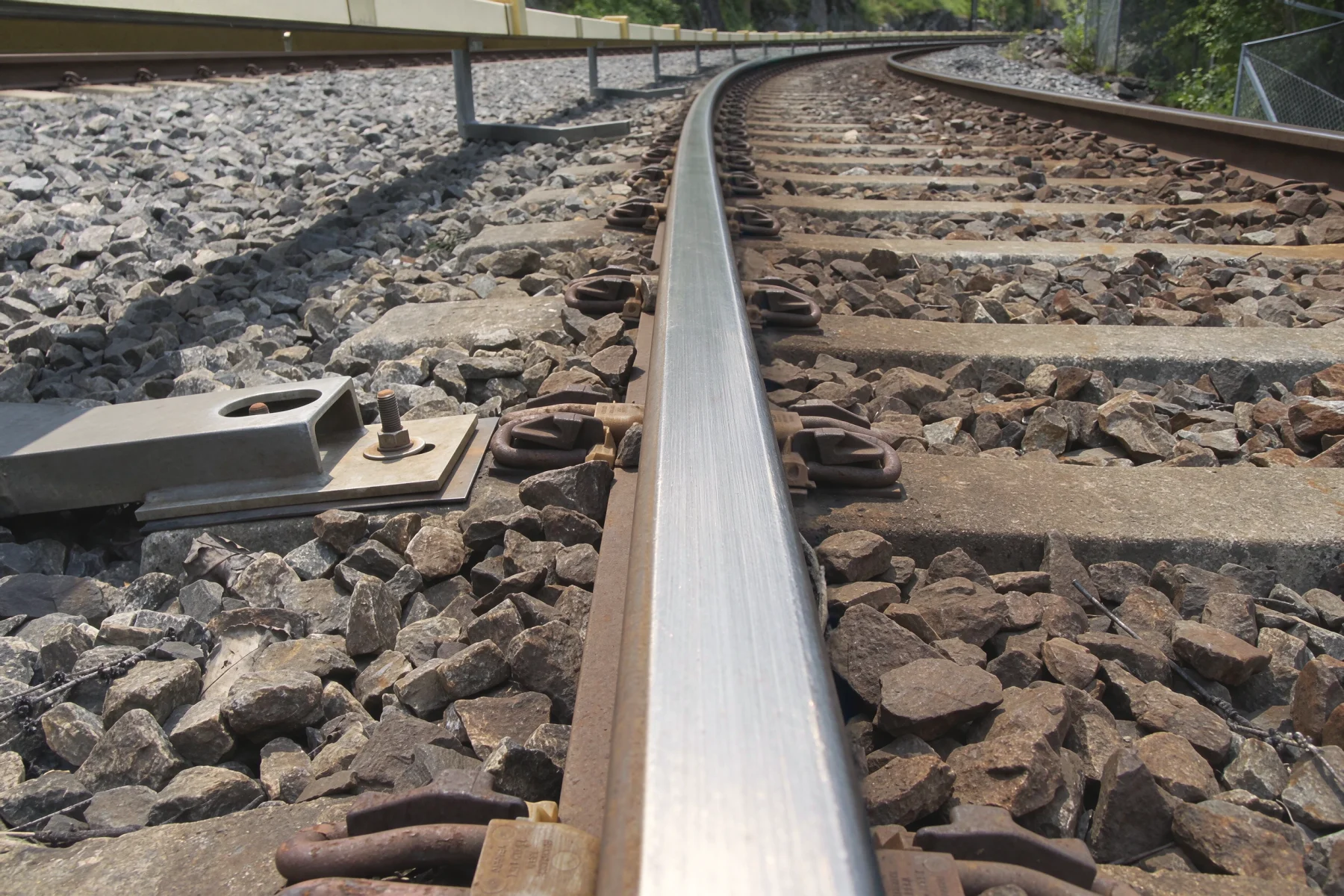
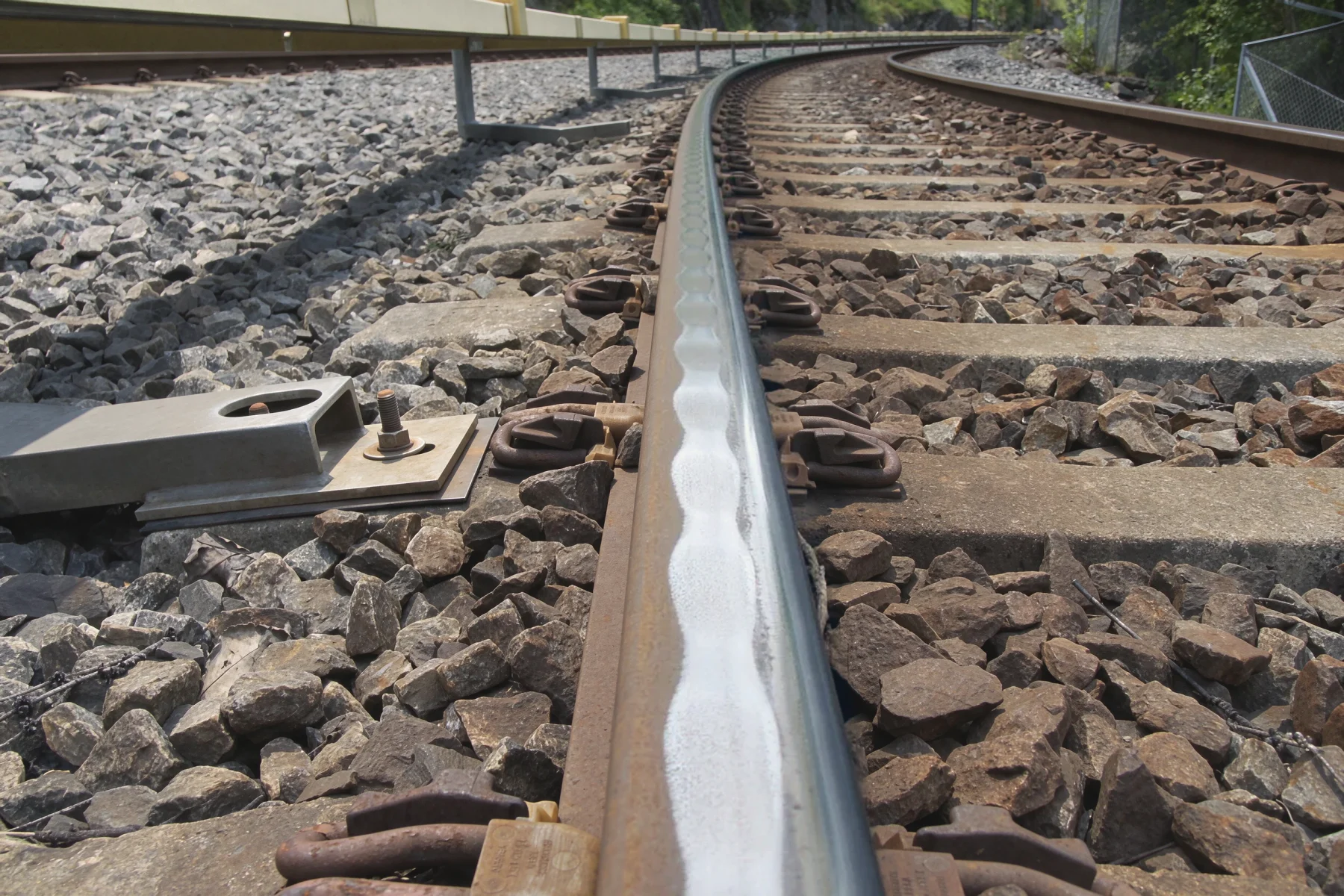
From corrugated to smooth.
Drag the slider: the same rail, corrugated and after reprofiling.
Technical guide
Railhead Damage.
AuthorDr Stuart Grassie
A personal overview of railhead damage by Dr Stuart Grassie, first drafted as a booklet for a major railway equipment supplier. It complements the established references on rail defects.
Point at a damage type to see it on the rail and what it means.
Squats
RCF defects in straight or gently curved track, within the running band on the rail crown where the rail is heavily sheared from locomotive traction. Sometimes known as “black spots”: the dark area is a depression above the crack.
Read more in the guide, Section 4.1 →Head checks (RCF)
Rolling contact fatigue: cracks grow from the contact stresses between a rolling wheel and the rail. Continuous RCF along the gauge corner of the high rail is known as head checking or gauge corner cracking. It is initiated by the high tangential forces required for curving.
Read more in the guide, Section 1.2 →Spalling
The detachment of macroscopic particles from the rail surface, for whatever reason. When RCF cracks branch roughly parallel to the surface, they meet up with another crack and form a spall.
Read more in the guide, Chapter 5 →Wheelburns
They occur where a wheelset has spun with little or no forward movement of the train. Concentrated heat and rapid quenching lead to localised thermal transformation and brittle particles that are readily detached.
Read more in the guide, Section 4.3 →Corrugation
The most common form of periodic damage on rails. Its wavelength is fixed by the vehicle and track dynamics: λ = v/f, with v the predominant train speed and f the frequency of the wavelength-fixing mechanism, about 50 to 1200 Hz.
Read more in the guide, Chapter 3 →Plastic flow
Bodily deformation, without loss of material, from high loading normal and tangential to the wheel/rail contact. Like wear, it changes the shape of the rail.
Read more in the guide, Section 1.1 →Contents
- IntroductionTerminology and damage categories
- Damage mechanismsWear, plastic flow, rolling contact fatigue, thermal damage
- Vehicle dynamicsPeriodic damage on straight and curved track
- CorrugationP2 resonance, rutting, pinned-pinned, Belgrospis
- Discrete defectsSquats, shells, wheelburns, studs, white etching layer
- SpallingFrom RCF, plastic flow, heat, ballast and studs
- MaintenanceGrinding, planing, milling, friction enhancement
- FeedbackWhich details and photos help
- Causes and referencesContact forces in curves and under traction, chapters 8 and 9
Range of services.
From the first survey to the maintenance strategy.
 01
Survey
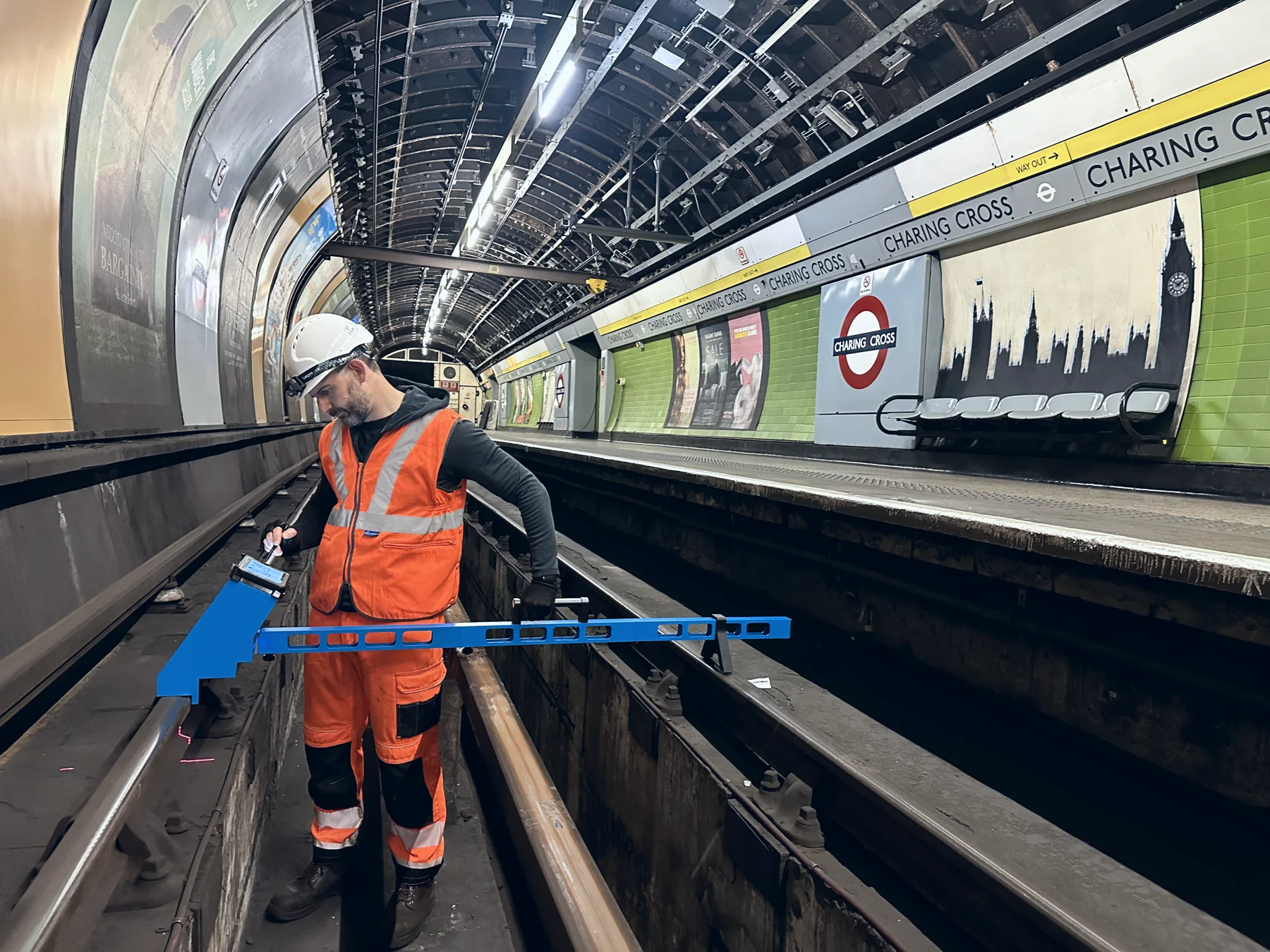
- Noise and vibration monitoring
- Corrugation surveys
- Rail wear and profile surveys
- Rail defect surveys, such as squats and studs
 02
Analysis
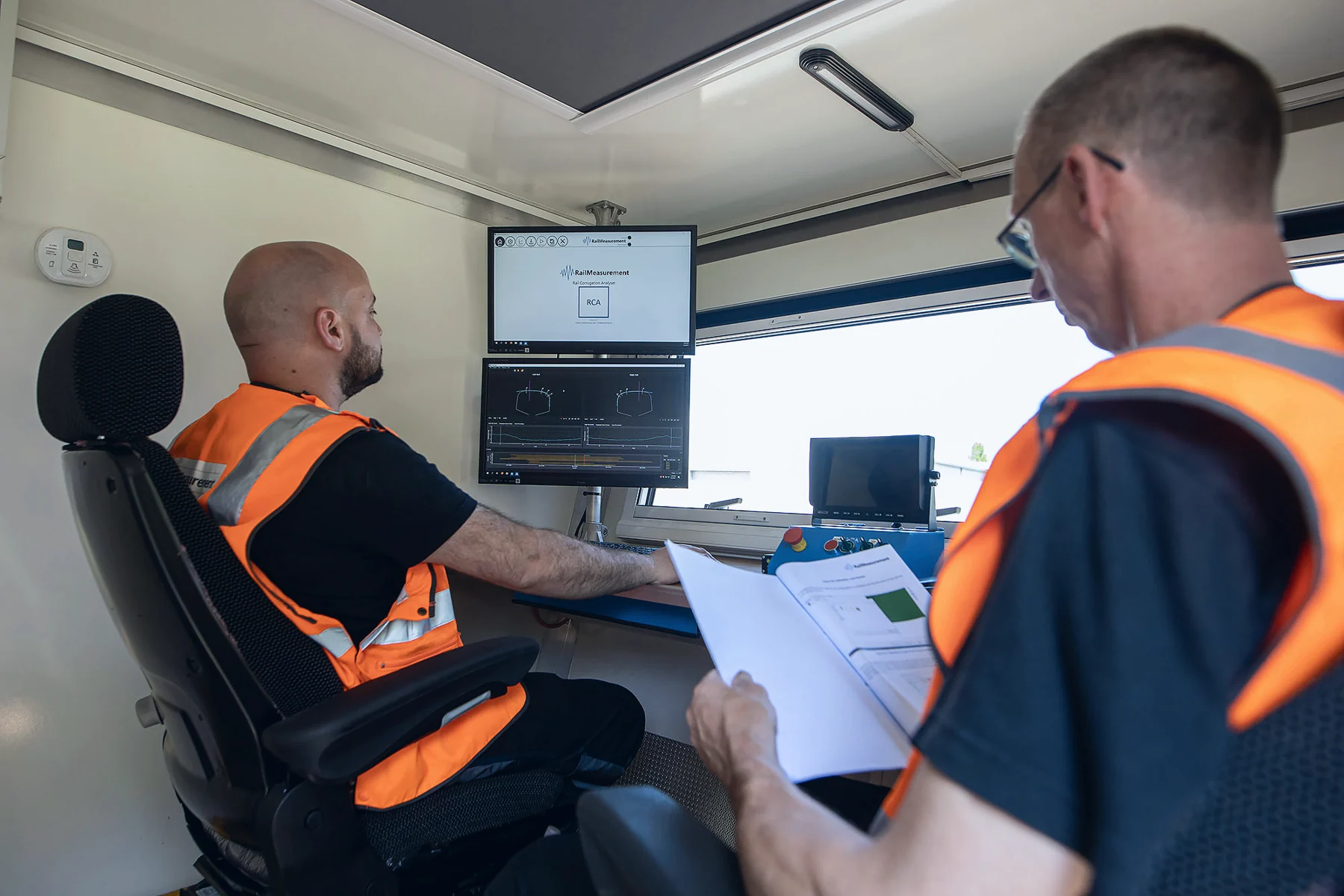
- Corrugation investigation
- Rolling contact fatigue investigation
- Track and vehicle noise assessment
 03
Strategy
- Noise and vibration reduction
- Rail defect management
- Planning and quality control of reprofiling
- Rail maintenance strategies
A problem on your line?
Describe what you observe: noise, corrugation, defects, wear. Photos help.